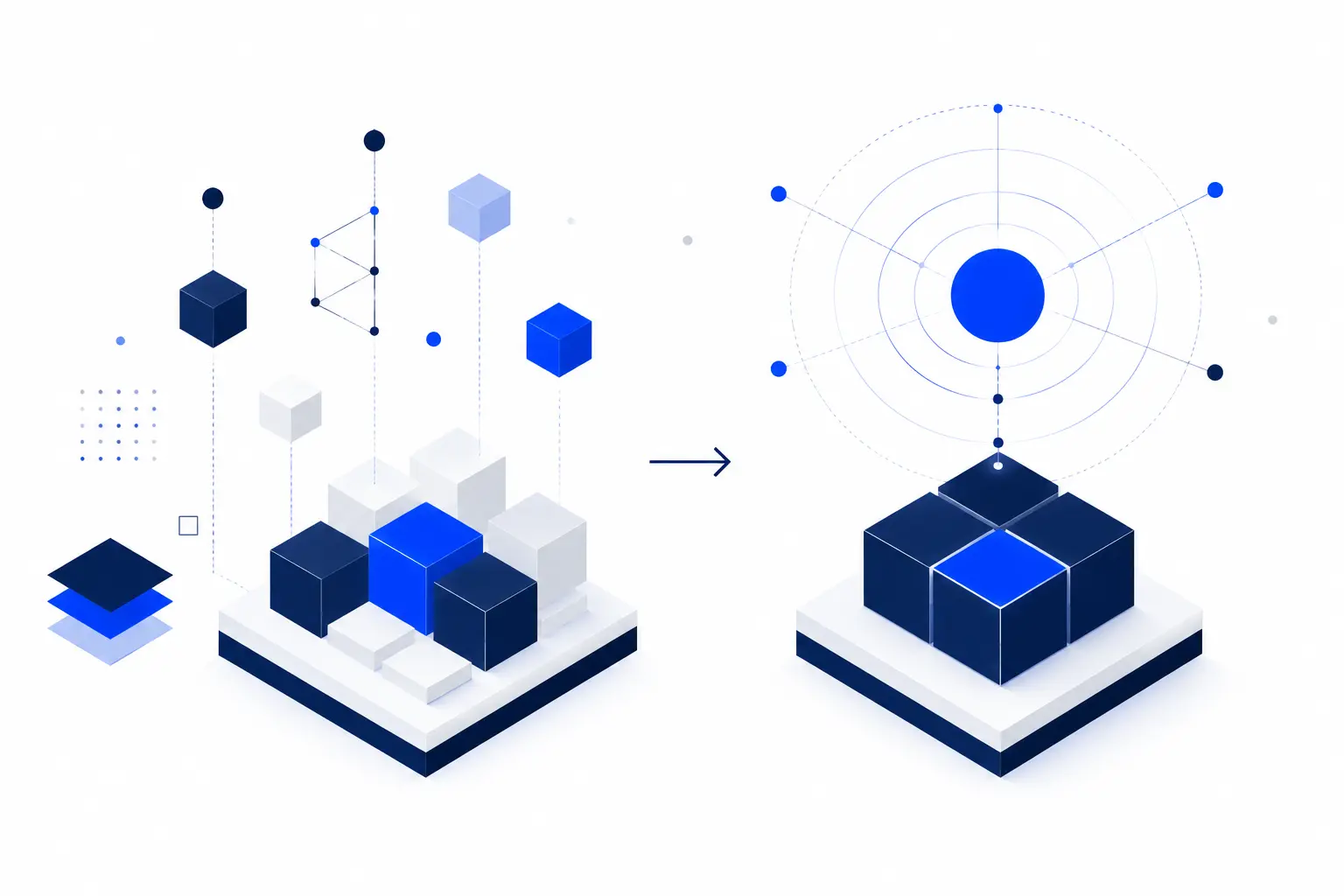

Authority before visibility means building the credibility signals that make your brand worth trusting before scaling the marketing activity that brings people to it. Visibility amplifies what already exists. Without authority signals in place, increased visibility produces awareness that does not convert into preference. With authority signals in place, the same visibility investment produces significantly stronger commercial outcomes.
The instinct to chase visibility is understandable. Every marketing metric points toward it. Impressions, reach, traffic, follower counts, brand awareness scores. The entire vocabulary of marketing is built around the idea that being seen more is the primary objective and that everything else follows from it.
But there is a prior question that most businesses never seriously engage with. Not how to be seen more, but whether what people see when they find you gives them a reason to trust what they are looking at.
Visibility without authority produces a specific and predictable outcome. It generates awareness that does not convert into preference, attention that does not compound into trust, and marketing investment that produces diminishing returns because the credibility foundation required to make visibility valuable is not in place. Understanding why this happens and what the correct sequence looks like changes how you think about almost every marketing decision you make.
What Visibility Actually Does
Visibility introduces your brand to people who have not encountered it before. It creates the initial awareness that is a necessary precondition for any subsequent relationship. Without some degree of visibility, no business can grow beyond the network it already has.
The problem is not with visibility as an outcome. The problem is with visibility as a starting point.
When someone encounters your brand for the first time, through an advertisement, a search result, a social post, or a recommendation, they make an almost instantaneous assessment of whether what they are seeing is worth further attention. That assessment is not based on your product quality, your pricing, or your customer service. They know none of those things yet. It is based entirely on the signals your brand is already broadcasting about its credibility.
A business with strong authority signals passes that assessment easily. The website communicates expertise and substance. The founder or team has a visible, credible track record. Third-party publications have found the business worth referencing. The positioning is specific and confident rather than generic and hedged. The cumulative effect of these signals is that a first-time visitor arrives with a disposition toward trust rather than skepticism.
A business without those signals fails the assessment before any marketing message has been evaluated at all. The visitor sees nothing that distinguishes this business from the hundreds of similar businesses they have encountered before. The visibility succeeded in bringing them there. The authority deficit ensured they did not stay.
The Sequence Most Businesses Follow
The conventional marketing sequence runs approximately like this. A business reaches a stage where growth requires new customer acquisition. It invests in advertising, content marketing, social media, or PR to increase visibility. It measures the results in terms of traffic, impressions, and leads generated. It optimises the campaigns that produce the best numbers and continues investing in the channels that appear to be working.
This sequence is not wrong. It is incomplete. It optimises for the top of the funnel without addressing the conditions that determine whether funnel activity converts into customers.
The missing element is the credibility infrastructure that transforms visibility from awareness generation into trust development. Without it, every pound spent on advertising is competing against the natural skepticism of an audience that has been marketed to relentlessly and has developed sophisticated filters for distinguishing between businesses that are credible and businesses that are simply present.
Visibility amplifies what already exists. If what already exists is a business with genuine, visible, independently validated authority, visibility accelerates growth. If what already exists is a business that looks like every other business in its category, visibility generates activity without producing preference.
Why Authority Changes What Visibility Produces
The relationship between authority and visibility is not simply additive. It is multiplicative.
A business with strong authority signals converts a higher percentage of every visibility interaction into genuine interest. An advertisement that reaches someone who has already encountered your brand in a trusted editorial context lands differently than an advertisement that reaches someone with no prior context. A search result that shows a business already referenced by publications they trust generates a different click-through response than a result from an unknown domain.
Editorial recognition from credible publications creates this effect because it provides external validation that your brand is worth considering before a potential customer has done any evaluation of their own. When a publication they already trust has already found your business worth referencing, some of that trust transfers. Not all of it, and not permanently, but enough to meaningfully change the starting point of every subsequent marketing interaction.
Media authority does the same at broader scale. A business that has been featured in publications its target audience reads has already passed a credibility threshold in the minds of that audience before any direct marketing has occurred. The visibility campaigns that follow reach an audience that is pre-warmed rather than cold.
Founder authority creates a human credibility layer that no brand-level marketing can replicate. A potential customer who has encountered your founder in a credible context, whose name appears on substantive expert content, whose expertise is visible and independently validated, arrives at any subsequent marketing interaction with a fundamentally different disposition than someone encountering an anonymous brand for the first time.
The Readiness Investment
Becoming media-ready is not a large project. It is a focused one. The elements that matter most can typically be addressed in four to six weeks of deliberate work.
A founder interview published on your website creates the in-depth founder story that journalists can read independently. A clear and specific positioning statement replaces generic descriptions with something distinctive. A brand story document gives journalists a narrative resource that makes their job easier. Two or three editorial placements in relevant publications create the prior validation that makes future coverage more comfortable to pursue.
None of these requires a significant budget. They require clarity about what your business actually is, who the person behind it is, and what evidence exists that either deserves to be taken seriously. Getting that clarity on paper, in a form that a journalist can find and evaluate independently, is the work that makes media outreach productive rather than premature.
What Authority Before Visibility Looks Like in Practice
Prioritising authority before visibility does not mean delaying marketing indefinitely while building a credibility infrastructure from scratch. Most businesses already have some authority signals in place. The question is whether those signals are strong enough to make visibility investment productive, and which gaps are most urgently limiting the return on marketing activity.
A business that has operated for several years with satisfied clients has genuine authority that has not been made visible. The expertise exists. The track record exists. The credibility is real. What is missing is the documentation of that expertise in formats that potential customers, journalists, search engines, and AI systems can actually find and evaluate.
Authority Assets such as a founder interview, a brand story, and expert content on the topics most relevant to your market take the authority that already exists and make it visible in forms that support every other marketing and business development activity. They are not created to replace visibility investment. They are created to ensure that visibility investment produces the return it should.
Editorial placements in publications your target audience already trusts create the third-party validation that no first-party marketing can replicate. Two or three well-placed editorial references create a credibility foundation that changes what every subsequent marketing interaction produces.
This is the practical meaning of authority before visibility. Not postponing growth. Sequencing investment so that the authority infrastructure is in place before significant visibility investment is made, ensuring that every pound spent on reaching more people is reaching them with a brand they are predisposed to consider credible.
The Long-Term Compounding Effect
The most important argument for authority before visibility is not the short-term improvement in marketing efficiency. It is the long-term compounding effect that authority investment produces while visibility investment does not.
Visibility decays. When advertising stops, traffic drops. When content publication pauses, organic reach declines. When social activity slows, audience engagement falls. Visibility requires continuous investment to maintain the level it has reached because it does not leave behind an asset that continues working independently.
Authority compounds. An editorial placement from eighteen months ago continues to influence how journalists, search engines, and AI systems perceive your brand today. A founder interview published two years ago continues to appear when someone searches for expertise in your field. A brand story that accurately represents your positioning continues to serve as a credibility reference for anyone who finds it, regardless of when it was written.
Each authority signal creates the conditions for the next one. As editorial recognition accumulates, media opportunities become more accessible. As media coverage increases, AI visibility improves. As AI visibility improves, more potential customers encounter your brand in contexts that pre-establish credibility before any direct marketing has occurred.
The businesses that build authority deliberately before scaling visibility investment create a compounding advantage that becomes increasingly difficult for competitors to replicate simply by spending more on advertising. The gap between a business with genuine, accumulated authority and a business with only visibility is not a gap that marketing budget can close. It is a gap that requires time, consistent effort, and the right sequence.
Where to Start
The right starting point for any authority-before-visibility strategy is an honest assessment of where your current authority signals stand.
An Authority Gap Scanner assessment provides a manual review of your editorial presence, technical trust signals, media visibility, and overall authority profile. It identifies which signals are already in place and which gaps are most likely limiting the return on your current visibility investment.
The assessment does not tell you to stop marketing. It tells you which authority gaps, if addressed, would make your marketing significantly more effective. That is a different question from how to get more visibility, and it typically produces a more useful answer.
Q1: What does authority before visibility mean?
Authority before visibility means investing in the credibility signals — editorial recognition, media mentions, founder expertise, trust documentation — that make your brand worth trusting before scaling advertising or content distribution that brings new audiences to it.
Q2: Why does visibility without authority produce poor results?
When a potential customer encounters a brand for the first time they immediately assess whether it is worth further attention. That assessment is based on credibility signals not product quality. A brand without strong authority signals fails this assessment before any marketing message is evaluated regardless of how well the visibility campaign is executed.
Q3: Does authority before visibility mean I should stop marketing while I build authority?
No. It means sequencing investment so that core authority signals are in place before significant visibility scaling. Most businesses can run visibility campaigns and authority building simultaneously. The argument is for prioritising authority work rather than postponing visibility entirely.
Q4: How much authority do I need before investing more in visibility?
The threshold varies by market and competitive context. As a practical indicator: if your business name and founder name search produces no third-party coverage, no editorial references, and no substantive expert profile, you are below the threshold where significant visibility investment will produce strong returns.
Q5: Is authority building more expensive than advertising?
Authority building typically requires a different investment profile rather than a larger one. Advertising requires continuous spend to maintain results. Authority building requires focused upfront investment that produces compounding returns over time. The long-term cost per customer acquisition is significantly lower for businesses with strong authority than for those relying primarily on paid visibility.
Find Out Which Authority Gaps Are Limiting Your Marketing Returns.
An Authority Gap Scanner reviews your editorial presence, trust signals, and media visibility to identify the gaps that are most likely reducing the return on your current visibility investment.